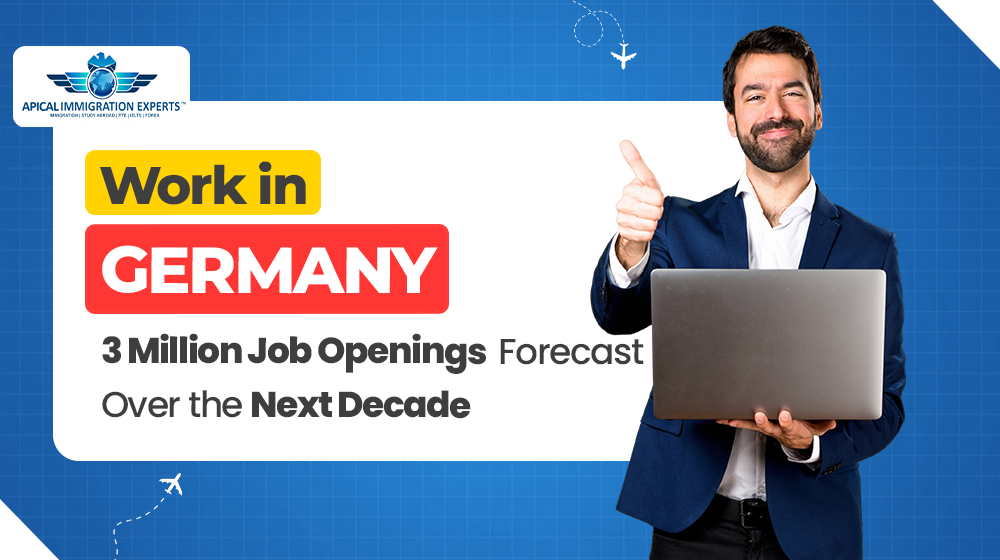
Germany is entering a major transition in its job market. Over the next ten years, the country is expected to see around 3 million job openings, driven by demographic changes, economic transformation, and growing skills shortages. For professionals considering working in Germany, this forecast signals strong long-term opportunities.
Why Germany Is Facing a Talent Gap
One of the biggest reasons behind this projection is Germany’s ageing population. A large portion of the workforce will retire in the coming decade, creating millions of vacancies that need to be filled. At the same time, fewer young workers are entering the labour market, making it harder for employers to replace outgoing talent.
Alongside demographics, Germany is also undergoing structural changes. The country is investing heavily in digitalisation, renewable energy, automation, and healthcare. These shifts are creating new roles while increasing demand for specialised skills that are already in short supply.
Current Job Market Snapshot
While Germany has experienced economic slowdowns in recent years, job vacancies remain high. Many companies continue to struggle to find qualified candidates, especially for skilled and technical roles. This has created a situation where unemployment and job shortages exist side by side — not because jobs are unavailable, but because the right skills are missing.
This imbalance is expected to grow unless Germany attracts more skilled professionals from abroad.
Sectors with the Highest Demand
The strongest job growth over the next decade is expected in:
- Healthcare and Elder Care – Nurses, caregivers, and medical professionals will be in constant demand due to an ageing population.
- Information Technology – Software developers, data specialists, cybersecurity experts, and AI professionals remain highly sought after.
- Engineering and Manufacturing – Mechanical, electrical, and industrial engineers continue to play a key role in Germany’s economy.
- Construction and Infrastructure – Housing projects, transport upgrades, and energy transition initiatives are driving demand.
- Skilled Trades and Logistics – Technicians, electricians, and supply chain professionals are essential across industries.
Opportunities for International Professionals
To address labour shortages, Germany has been actively updating its immigration policies to make it easier for skilled foreign workers to enter the country. Work visas, recognition of foreign qualifications, and job-seeker pathways have become more accessible, especially for professionals in high-demand fields.
For international workers, this means Germany is not just open to talent — it needs it.
What Job Seekers Should Focus On
If you’re planning to work in Germany, preparation is key:
- Build skills that match Germany’s shortage occupations
- Gain relevant work experience and certifications
- Learn basic German, especially for healthcare and service roles
- Understand visa options and qualification recognition requirements
Final Thoughts
Germany’s forecast of 3 million job openings over the next decade reflects both a challenge and an opportunity. While employers face growing talent shortages, skilled professionals — especially those willing to adapt and upskill — stand to benefit from stable careers, strong worker protections, and long-term growth prospects.
Planning to work in Germany? Get expert guidance on jobs, work visas, and eligibility requirements.
- Email: info@immigrationxperts.com
- Call us: +91-9999467686, +91-8447-696555